Report No.
#TEST-1
Rate this Script
Share Report
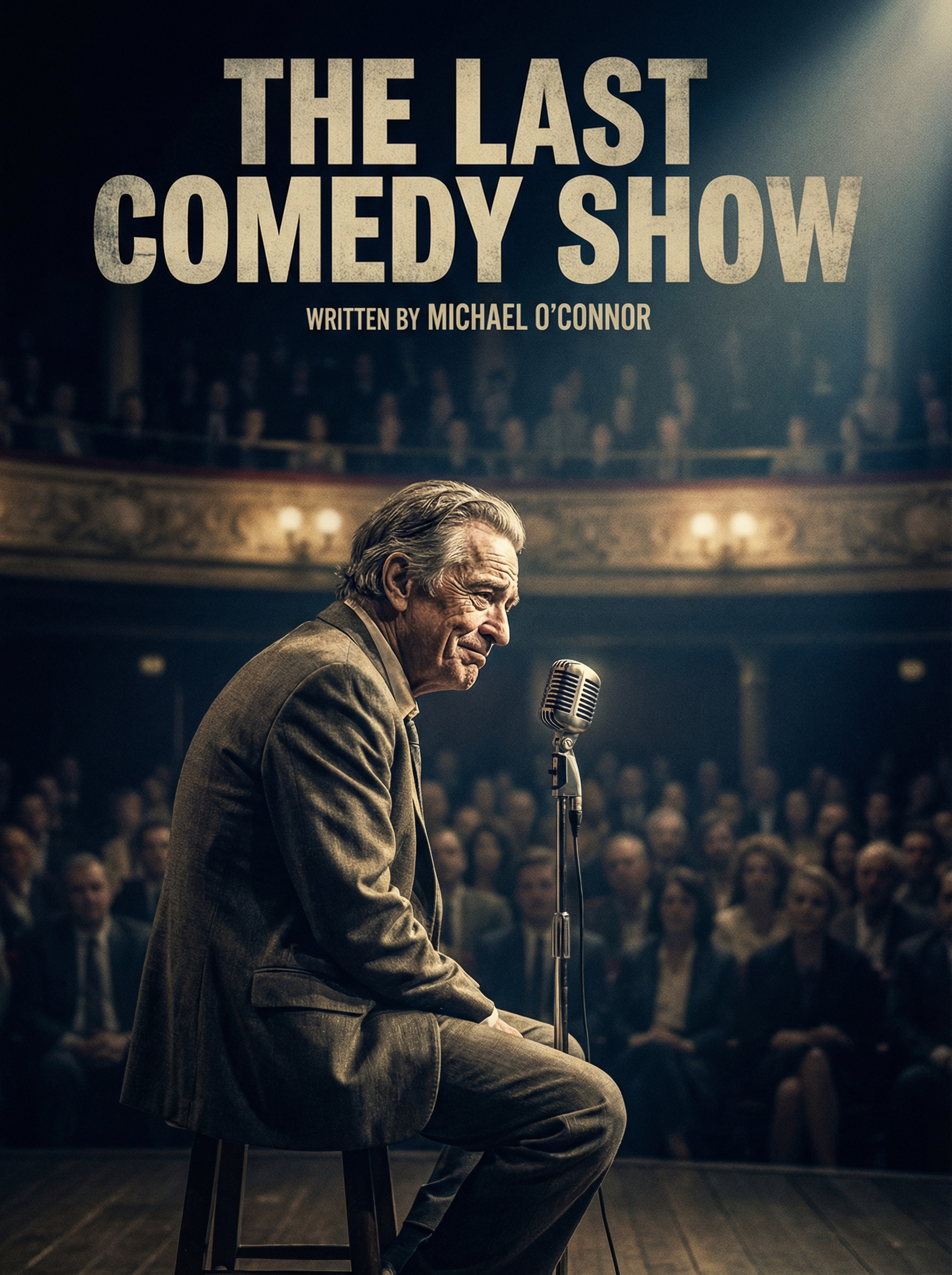
The Last Comedy Show
"When a legendary comedian is diagnosed with a degenerative disease, they plan one final, honest comedy special - but honesty about their failures, regrets, and pain might destroy their legacy...."
Synopsis:Jimmy Katz is a comedy legend. For 40 years, he's been America's funniest man, filling arenas and inspiring generations of comedians. Behind the persona, he's deeply unhappy - his relationships are destroyed, his kids won't speak to him, and he's been lying to audiences his whole career, hiding pain behind punchlines. When he's diagnosed with ALS, giving him maybe two years, he decides to do one final special where he tells the truth. His team is horrified. Jimmy's comedy has always been safe, observational, universally appealing. The truth - about his failed marriages, his struggles with addiction, his fear of irrelevance - will alienate his core audience. But Jimmy is determined. If he's going out, he's going out honestly. As he develops the special, writing jokes about disease, death, and his own failures, something unexpected happens: the comedy is brilliant, but it's not funny in the traditional sense. It's dark, confessional, painful - comedy as therapy. His team argues he's committing career suicide. But younger comedians who visit his rehearsals are blown away. This is what comedy should be: truth-telling, even when it hurts. The special becomes a media event. Will America's funniest man deliver his safest hits, or will he burn his legacy? Pressure mounts from sponsors, networks, and fans who want the old Jimmy. Even his ex-wife shows up, begging him not to air their dirty laundry publicly. But Jimmy's disease is progressing faster than expected - this might be his last chance to speak while he still can. The night of the taping, Jimmy takes the stage and delivers the most honest 90 minutes of his life. He doesn't spare himself or anyone else. He talks about being a terrible father, a worse husband, and a coward who hid behind jokes instead of facing his problems. It's brutal, devastating - and occasionally, unexpectedly, deeply funny in a way that makes you uncomfortable for laughing. The audience doesn't know how to react. Some walk out. Some cry. Some laugh despite themselves. Jimmy ends the special with a haunting closer: "I've spent my whole life trying to make you laugh. Tonight, I just wanted to tell you the truth. If you laughed, great. If you didn't, that's honest too." The special airs and divides the nation. Half hate it, calling it self-indulgent and depressing. Half call it a masterpiece, the most important comedy special ever produced. Critics are split. But Jimmy doesn't care - he's liberated. In his final months, he rebuilds relationships with his kids, makes peace with his past, and finally, genuinely makes people laugh by being himself. The ending shows Jimmy's memorial service, where comedians share stories. The truth is: the special wasn't for the audience. It was for him.
Performance Metrics
Executive Analysis
Execution Evaluation
Jimmy is a complex, deeply flawed protagonist - neither hero nor villain. The special-within-the-film needs to be genuinely powerful, which is challenging to write. The jokes shown need to walk the line between funny and painful. Supporting characters are well-drawn, particularly the team torn between protecting Jimmy and respecting his autonomy. Pacing is solid. The emotional beats are earned. Minor concern: the ending may feel too neat given the messiness that precedes it. Would require a fearless lead performance to fully work.
Market & Audience
Challenging commercial proposition. The dark subject matter (terminal illness, career suicide) limits mainstream appeal, but there's a devoted audience for this type of introspective drama. Budget moderate ($15-25M) with success dependent on casting - needs genuine comedy legend or beloved dramatic actor. Similar to "The Wrestler" in exploring performer mortality. Appeals to adult audiences, particularly those interested in comedy and showbiz. Better suited for prestige streaming than theatrical, but could work with right festival launch.
Commercial & Prestige
Limited appeal requiring specific casting and positioning. Dark subject matter excludes mainstream comedy audiences - this is dramatic character study about comedian, not comedy. Viability depends on major comedy name doing vulnerable drama or dramatic actor tackling comedy world. Without star power, struggles commercially. $15-25M budget appropriate. Festival positioning crucial - Sundance or Telluride. Fundamentally awards play seeking Best Actor and screenplay recognition. Streaming platforms may embrace with star casting. Adult audiences interested in mortality and legacy - limited demographic. International appeal challenging. Like 'The Wrestler' - critical success, awards, modest returns.
Pacing & Structure
Builds steadily toward comedy special as climax and catharsis, with occasional momentum loss. Act one establishes success, unhappiness, ALS diagnosis efficiently. Decision to do honest special launches clearly. Act two development/rehearsal challenging to dramatize - watching comedy writing can be static. Team conflicts and pressure maintain some momentum, but development scenes sag pages 40-60. Ex-wife and children arrival energizes final approach. Special is make-or-break - must be transcendent. Aftermath provides resolution. Memorial framing could help. Requires careful structure for undramatic creative process.
Cinematic Potential
Intimate, performance-driven approach with spectacle from lead's work. Backstage sequences offer standard settings serving authenticity focus. Comedy special is visual centerpiece requiring careful attention to performance and audience reaction. Documentary-style realism appropriate. Multiple camera angles reflect divided reaction. Archival footage provides context and contrast. ALS progression handled with dignity and visibility. Memorial scenes visualize community and legacy. Not visually ambitious - success depends on lead performance. Think 'The Wrestler' in unflinching intimacy toward performer mortality.
Theme & Innovation
Fresh take on the performer-legacy narrative. The concept of the final special as truth-telling rather than career celebration is compelling. The exploration of honesty vs. entertaining is philosophically interesting. The structure - building to the special - provides clear dramatic arc. Some similarities to recent films about comedians, but the terminal diagnosis angle and the focus on legacy destruction rather than comeback is distinctive. The meta aspect of comedy about comedy works well.
"Awards-bait material that could attract major talent looking for meaty dramatic roles. The script is mature, thoughtful, and emotionally sophisticated. Right for auteur directors and prestige indie distributors. Limited commercial ceiling but strong artistic merit."